A bunion needs space across the joint and a shoe that still holds the heel. Wide fit footwear is the sensible place to start. Clarks is a maker we fit for width, and a roomy toe box may be more comfortable than a narrow fashion last. This is advice from the shop, not a treatment, and it will not put a bunion right.
Clarks extra wide is worth asking for, and we will only offer it when that fitting exists on the style. The Clarks size and fit guide sets out their width fittings, including the children’s letters. Adult styles vary. For medical advice, please see a podiatrist, then bring what they have told you and we will fit within it.
We will not say a shoe cures a bunion, and we will not say every Clarks style is suitable. Some lasts are rounder and may be more comfortable. Some are neat and will press. Men’s shoes on the formal rail are a different job from a soft everyday shoe, and we will tell you which pair you are holding. If a clinician has advised a specific depth or fastening, that advice outranks anything on this page.
Width letters, and how Clarks uses them, are in the Clarks size and fit guide. If you also need a formal pair, see Clarks men’s leather formal shoes and let us say honestly whether the last is roomy enough.
They can be a comfortable choice when the last is roomy and the width is right. People ask for the best Clarks shoes for bunions, and we will not name a winner. The more comfortable shoe is the one that leaves the joint free and still holds the heel. A Clarks shoe in the wrong fitting is no kinder than any other tight shoe.
We are fitters, not podiatrists, and we would not claim a clinical endorsement. Some people with bunions find a wider, softer shoe easier to wear. Others need advice that a shop cannot give. Please ask your podiatrist what to look for, then come to us to see whether a Clarks fitting matches that brief.
There are wider fittings, deeper toe boxes and softer uppers, which some people find easier to wear. They are still shoes, not medical devices. Not every adult style has that choice, so we check the label with you.
Avoid a pointed toe, a very narrow last, and a heel height that throws your weight onto the forefoot. A shoe that looks acceptable while you sit and then presses when you stand is the one to leave. If a seam sits on the joint, no amount of wearing in is a plan we recommend.
Neither. Tight presses the bunion. Loose lets the foot slide forward until it presses anyway, and it rubs the heel. You want the shoe held at the back and free across the joint, with a little room in length. We will say if we cannot get both in the styles we have that day.
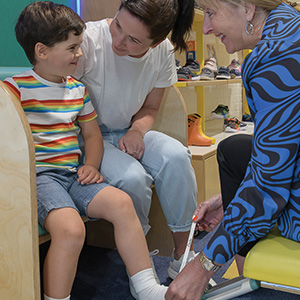
Come to Gabriel’s Hill and we will check length and width. If a podiatrist has written down what to avoid, bring the note. We fit the shoe. They advise on the foot.
 customer service reviews