


We could not find any products that match your selection.
About R. M. Williams: R. M. Williams is an Australian bootmaker, founded in 1932, and still best known for pull-on boots such as the Craftsman, with a one-piece leather sole and a chiselled toe. We stock the boots, plus shirts, knits, jeans and leather belts. Men’s boots are made on their AU/UK scale. Use the UK size and the foot length in the chart.
Men’s R. M. Williams boots are sized in AU/UK, with half sizes. The length is true to size and the standard width is G, which is neat rather than roomy. Match your foot to the centimetre column. If you are between lengths, take the larger size. If the length is right and the boot is tight across the ball of the foot, a wider fitting is the better answer than a longer boot. UK 8.5 and UK 9 are the two sizes where our EU number sits half a size below theirs.
Letter sizes are tops: shirts, knits, the Rydal vest and the Alberton jacket. The chest figures are R. M. Williams’ body measurements, so S is 95 cm (37.4 in) and M is 100 cm (39.4 in). A four-digit size such as 3632 on the Ramco jeans is waist 36 and inside leg 32. A plain number such as 34, where we are not showing a leg length, is a belt or a shorts waist in inches. Nicholson shorts in 32 and 36 use that same waist. The Clapton oxford shirt and the Mulyungarie knit also sit in our children’s department, but they are adult sizes and use this chart.
Belt sizes are in inches, measured where you wear the belt. A size marked 34″ waist is the same 34 inch waist as a plain 34. If you are between sizes, take the larger one. The centimetre column is the waist from R. M. Williams’ jeans and shorts chart (46 inches is the inch converted, because that chart stops at 44).
Brush dried mud off leather boots, then work a leather conditioner into the upper and the edges of the sole every few months. Dry wet boots away from direct heat, and use shoe trees if you have them so the shape holds between wears.
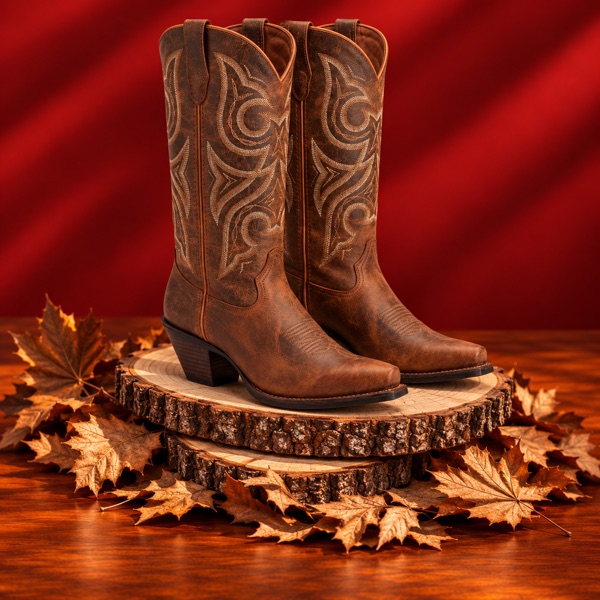
The pull-on boot R. M. Williams are known for: a chelsea with a chiselled toe and a one-piece leather sole.
A sole cut from a single piece of leather that wraps up around the heel. It is why the boot feels close and shaped, rather than like a roomy work boot.
The standard fitting. F is narrower, H is wider, and X is extra wide on selected sizes. Measure around the widest part of your foot.
A fine-grained leather from young cattle, used on some of the smarter boots.
On length, yes. Use your usual UK size and the foot length in centimetres. The standard G fitting is neat, so they can feel closer through the width than a roomy boot even when the length is right.
Only if your foot length falls between two sizes: R. M. Williams say take the larger length. Do not go longer to ease a tight width. The upper moulds, it does not stretch out. Ask about an H fitting instead.
F is narrow, G is the regular fitting most people take, and H is wide. Some sizes also come in X, which is extra wide. The step from G to H is about a quarter of an inch around the ball of the foot. Measure both feet and use the larger one.
A little easing, not a painful break-in. They should feel comfortable from new. A small amount of heel lift is normal and usually settles as the sole flexes. Pain across the toes or instep on day one means the size or the width is wrong.
The UK size on our site matches the UK size they print. The EU number is off at UK 8.5 (they say EU 43, we show EU 42.5) and at UK 9 (they say EU 43.5, we show EU 43). Order by UK size and foot length.
 customer service reviews
